



Key Takeaway: There are several techniques you can use to build self-belief. Stop procrastinating and try one today.
In today’s professional landscape, technical expertise alone is not enough to thrive in leadership, especially as a woman. Confidence, resilience, and the ability to trust in one’s own value are crucial traits that set successful leaders apart. Yet for many women in leadership roles, self-doubt remains a persistent companion.
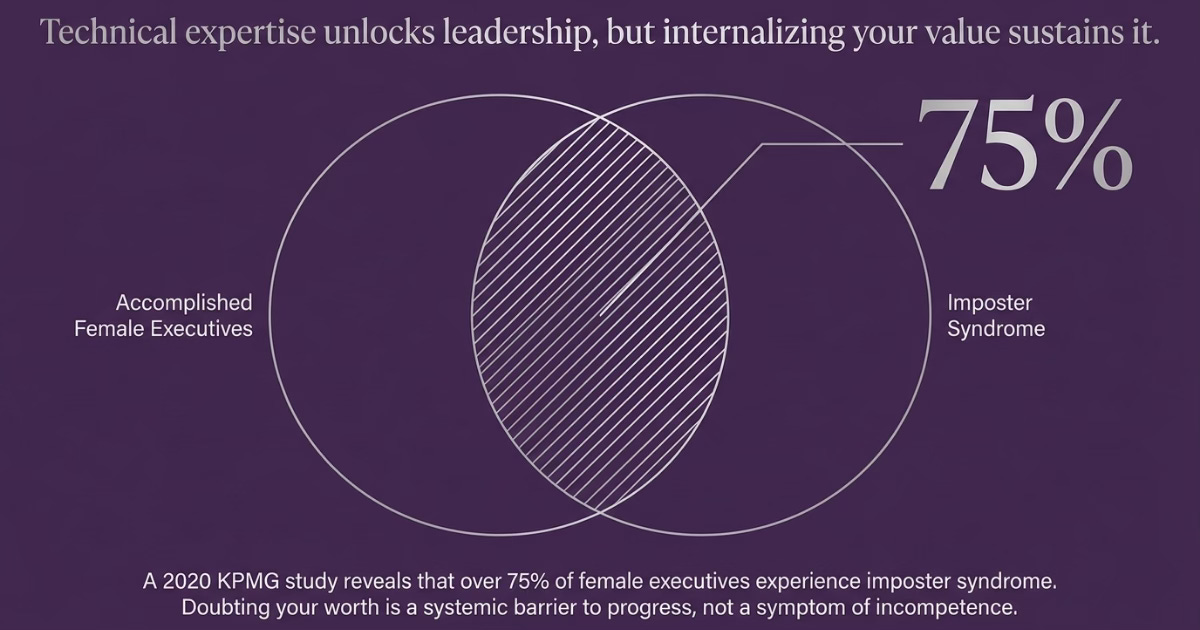
Research has shown that even accomplished women can struggle to internalise their success. A 2020 study published by KPMG revealed that over 75% of female executives reported experiencing imposter syndrome at some point in their careers. Doubting your own worth and skills quietly eats away at you, standing in the way of progress, promotion and growth.
So how do we fight back against this internal struggle? I have collated a couple of psychology based tools here that can be used to build confidence.
Word of warning, constantly looking to add more ‘tools to your toolbelt’ is not a magic pill to being a stronger leader. Pick one that resonates with you and consider how you can incorporate small changes into your already busy day.
Understand Where Self-Doubt Comes From
Before building self-belief, it’s important to recognise where doubt originates. Dr Valerie Young, an expert on imposter syndrome, outlines that high achievers often attribute success to luck, timing, or external factors rather than their own capabilities. This mindset creates a fragile foundation for leadership, as external validation becomes the only measure of worth.
Self-belief and confidence isn’t about being fearless. It’s about recognising the toxic thoughts that fuel self-doubt and learning to move past them. Awareness is the first step towards creating real, repeatable confidence.
Adopt a Growth Mindset
Dr Carol Dweck’s pioneering research at Stanford University on growth mindset shows that how we perceive our abilities dramatically impacts our potential. Those with a fixed mindset believe their talents are innate and unchangeable, leading them to avoid challenges and fear failure. In contrast, a growth mindset encourages viewing abilities as skills that can be developed through effort and learning.
For women in leadership, cultivating a growth mindset means reframing setbacks as opportunities rather than personal failures. It shifts the focus from “Am I good enough?” to “What did I learn from this?” This small but powerful change builds resilience and continuous development, two essential ingredients for long-term success as a leader.
Strengthen Your Leadership Presence
Research from social psychologist Amy Cuddy highlights the connection between body language and self-perception. In her studies, adopting open, expansive postures, known as “power poses”, was linked to increased feelings of confidence and reduced stress levels.
Leadership presence is about more than commanding a room; it’s about aligning how you feel internally with how you present externally. Simple practices such as maintaining strong posture, making deliberate eye contact, and speaking with measured pauses help project confidence, not only to others but to yourself. When your body language reinforces your sense of competence, it creates a feedback loop that strengthens self-belief from the inside out.
Normalise Discomfort
Stepping out of our comfort zone feels uncomfortable but that’s not a sign you’re doing anything wrong. Neuroscience research shows that when we engage in new, challenging behaviours, the brain initially perceives them as threats. Over time, with repetition, these behaviours feel more natural as new neural pathways are strengthened.
Normalising discomfort means understanding that feelings of fear or uncertainty are a natural part of growth. Instead of interpreting these feelings as a sign you are out of your depth, recognise them as evidence you are expanding your capabilities. Confidence doesn’t come before action. It grows because of it.
Focus on Internal Validation
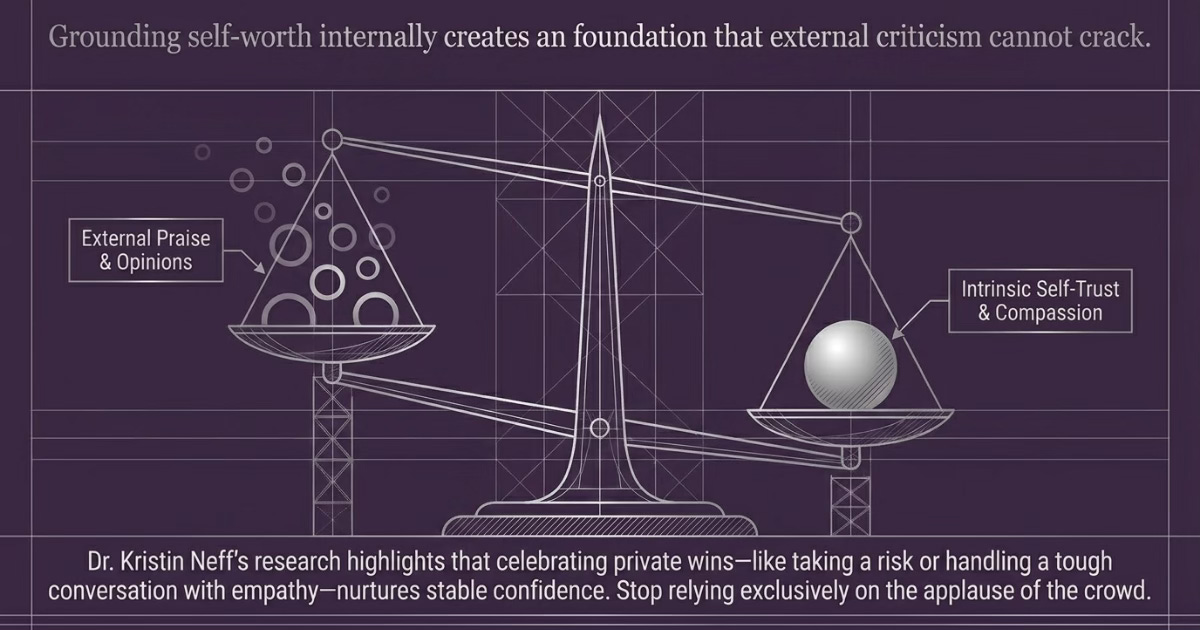
Often, confidence stems from whose opinion you prioritise. Dr Kristin Neff’s research on self-compassion highlights that grounding your self-worth internally, rather than relying exclusively on external praise, builds more stable confidence.
Celebrating private wins reinforces intrinsic motivation and self-trust. Whether it’s delivering a tough conversation with empathy, taking a risk on a new idea, or mentoring a junior colleague, acknowledging these leadership moments for yourself nurtures the foundation of true self-belief.
Practical Steps to Strengthen Self-Belief Today
If you are ready to start building self-belief intentionally, try implementing one of these small but impactful actions:
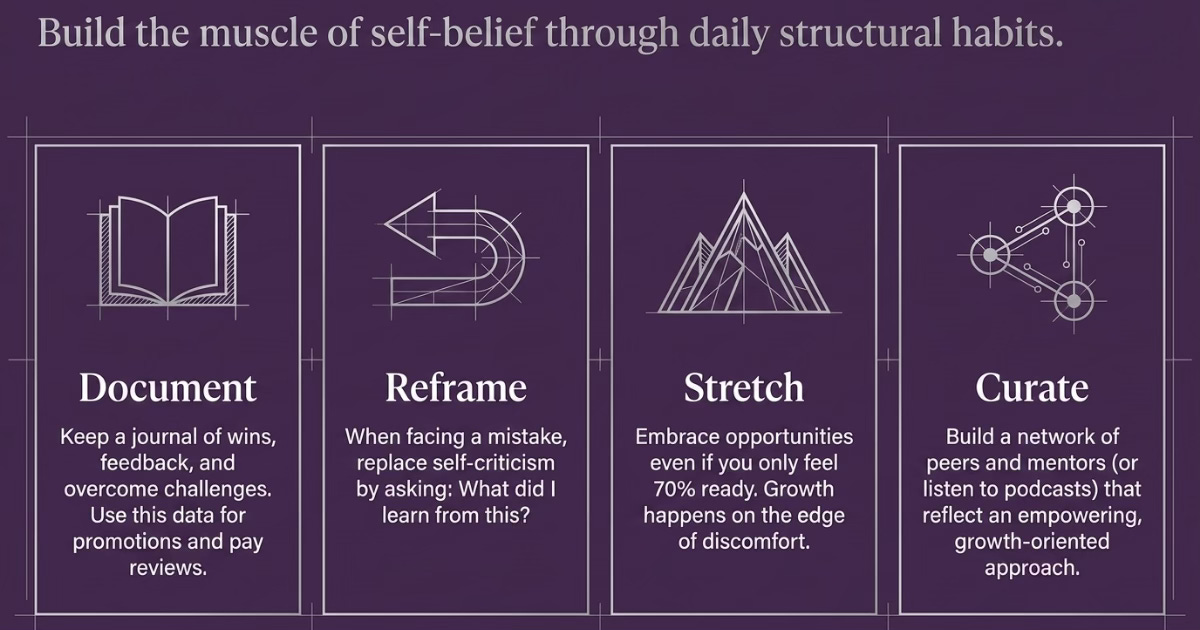
Document your achievements: Keep a journal where you record wins, feedback received, and challenges you have overcome. This creates a good reminder of your skills as well as being a great place to start when applying for a promotion or asking for a pay rise.
Reframe failure: When faced with a challenge or mistake, practice asking: “What did I learn from this?” or “How would I do that differently next time?” rather than defaulting to self-criticism.
Focus on growth, not perfection: Embrace opportunities that stretch you, even if you don’t feel 100% ready. Growth happens on the edge of discomfort, not inside your comfort zone.
Surround yourself with cheerleaders: Build a network of peers, mentors, and resources that reflect a growth-oriented, empowering approach to leadership development. Podcasts are a great place to start.
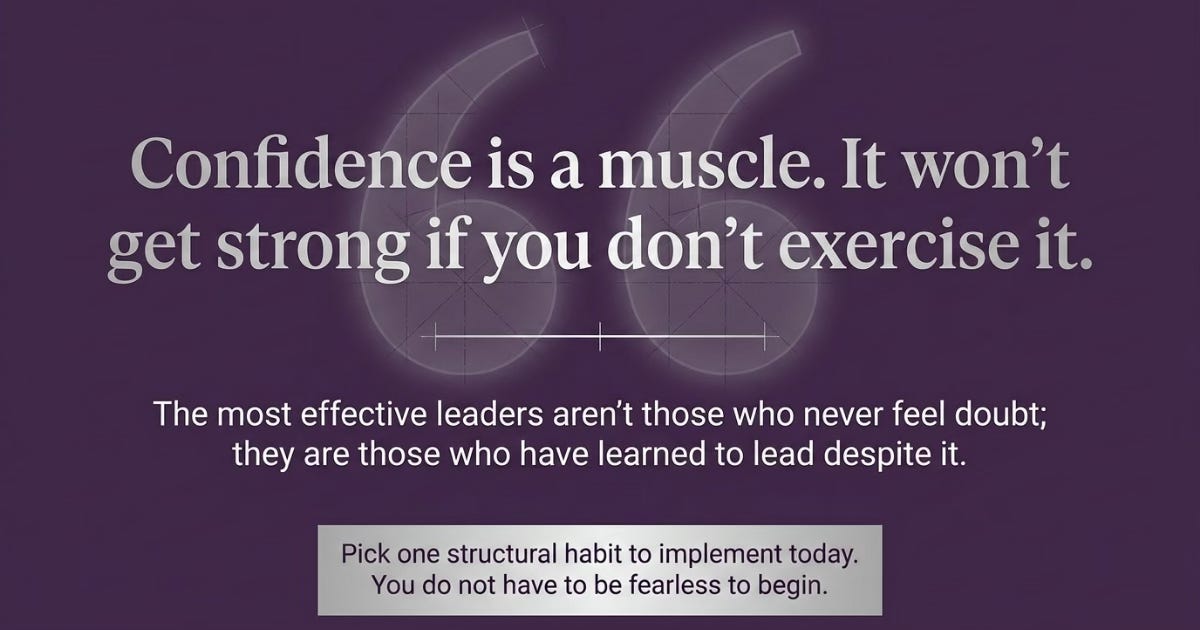
Confidence is a Muscle, it won’t get strong if you don’t exercise it.
The most effective leaders aren’t those who never feel doubt. They are those who have learned to lead despite it. Self-belief is not something you either have or you don’t; it’s a skill that can be cultivated, strengthened, and deepened at every stage of your career.
Take Action: Pick one practical step to try this week to help silence that self doubt.
If you don’t know where to start, I am already cheering you on. Reach out if you need a pep talk.