Key Takeaway: You don’t need to operate at 110% to be effective. Aim for 75% effort while being strategic about prioritising, delegating, and setting expectations can protect your wellbeing without hurting performance.
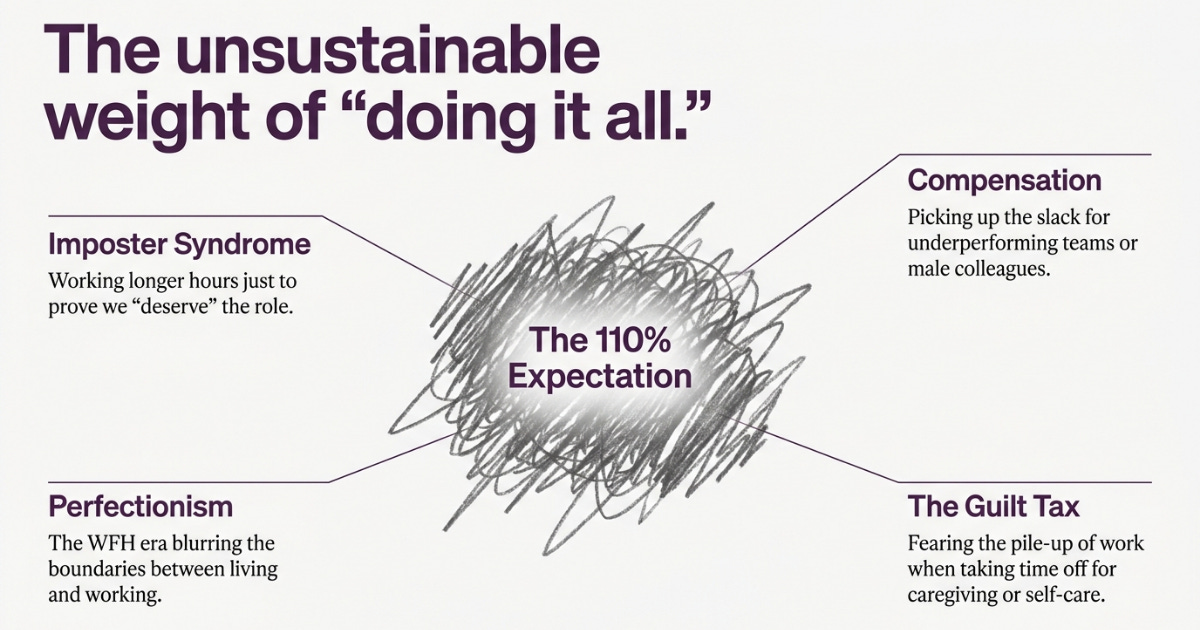
Most of us are working in a world where women feel the constant pressure to work at 110%, work more hours, deliver over and above the capacity of a standard 40 hour work week just to prove they deserve their job. Women are drowning in perfectionism and working longer hours than normal thanks to work from home flexible arrangements and the concept of “doing it all”. So how do we take a step back, give ourselves some breathing room but still feel like we are contributing enough at work?
Why do we feel the need to perform at such a high level, especially when our male colleagues are usually not working or delivering nearly as much as we are. Imposter syndrome and the fear of people thinking we don’t deserve our role, that we were promoted too soon, or that we are destined to fail push us to work longer and harder than others. The fear of these negative thoughts or comments from others is what drives us to constantly need to prove ourselves.
I see it constantly with women particularly in middle or senior management. The long hours, the sacrifices, the compensating for lacklustre performances from male colleagues or underperforming teams. Even just the need to take time off to care for a sick child (or heaven forbid) ourselves is difficult to do without the guilt creeping in and the knowledge that the work is just piling up in our absence.
Your 75% effort is worth more than others 100% effort.
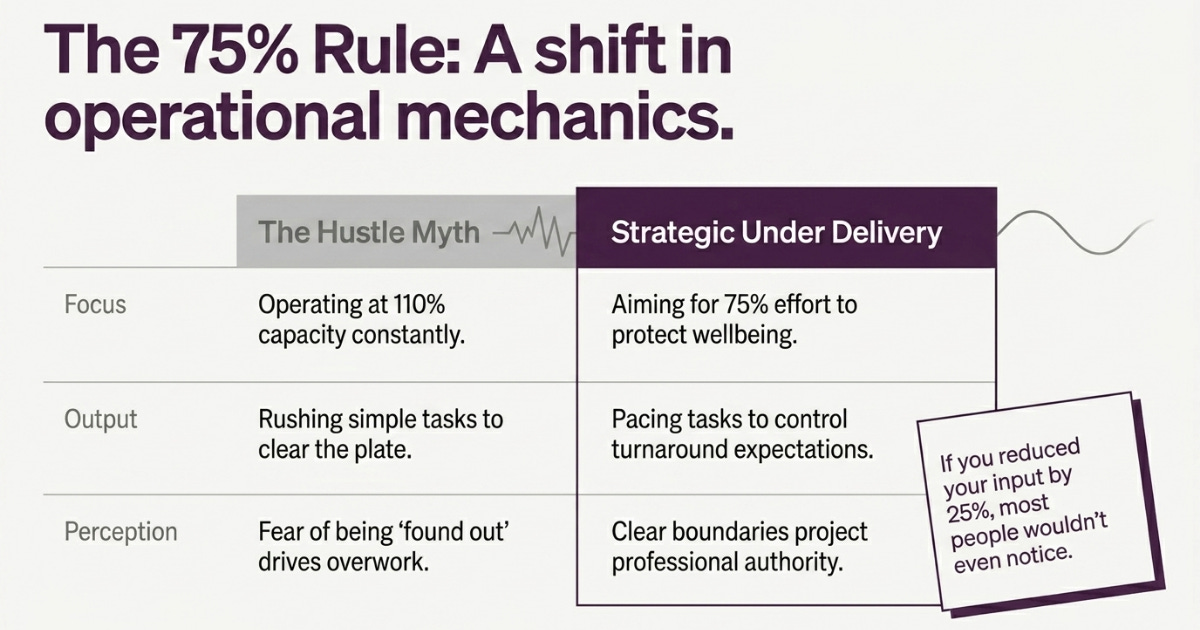
If you reduced your work input by 25% most people wouldn’t even notice. We have all heard this advice before but this is your reminder to put it on a post-it note under your computer screen, put a daily reminder in your phone or print it on a t-shirt so it doesn’t get forgotten. This is not about slacking off or underperforming to the point your leader’s decide you need to be managed but taking a step back, prioritising the workload, delegating where possible and setting realistic expectations for yourself and with your managers.
You can only do what you can do, anything beyond that is unreasonable.
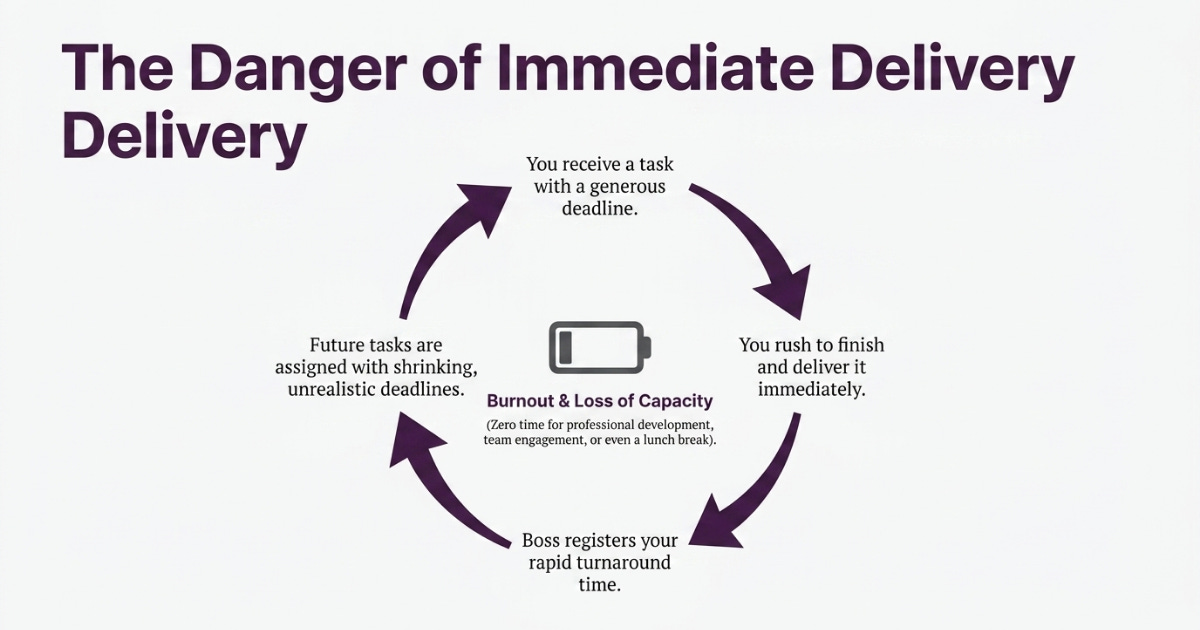
Strategic Under Delivery goes one step further and encourages you to push towards deadlines in a strategic way rather than through sheer overload or procrastination. If you have plenty of time before a set deadline, but it is a simple task you could get done immediately, set aside some time to complete the task but don’t deliver on it immediately. Just because you can get it done and off our plate does not mean you need to rush into it. By over delivering and getting the task finished early, you are setting an expectation with your boss that you can deliver your workload in a much quicker timeframe encouraging them to give shorter and shorter turnaround times. This can lead to unrealistic pressures being placed on your work compared to others in the workplace. It also removes your ability to take time out to focus on your professional development, step in when urgent tasks inevitably arise, engage with your team or in some cases even take a lunch break.
If this is already where you find yourself, it is ok to push back against unrealistic deadlines and set the expectation for the workload that is more reasonable and achievable in amongst your other priorities. Do this early and not 2 hours after your boss expected it on their desk. This only makes you look unprofessional and pushes you towards underperformance. Communicate expectations with those around you to ensure you have a clear deadline that everyone is aware of.
Does Strategic Under Delivery actually work?
When I first returned to my government job after 13 months maternity leave I was tasked with drafting a whole of government strategy on something I had very limited subject matter expertise on. By the end of the first week I had drafted a very rough version for initial review by the senior manager. The following Monday I had a reply with 2 basic changes and a return date by the end of that week. I looked at it and thought, I could do it in an hour or 2 and send it straight back but that would set the expectation that I could turn everything around in such a short timeframe. I had been given a week, so I made the changes requested and then sent it to some stakeholders for their initial input. Being government, consultation is everything and is often rushed or overlooked entirely. Being a broad document, it would need consultation inevitably, but I took the opportunity to add value to what was being provided back to the senior executive and start off on the right foot with those that would need to be onboard with the strategy at a later date.
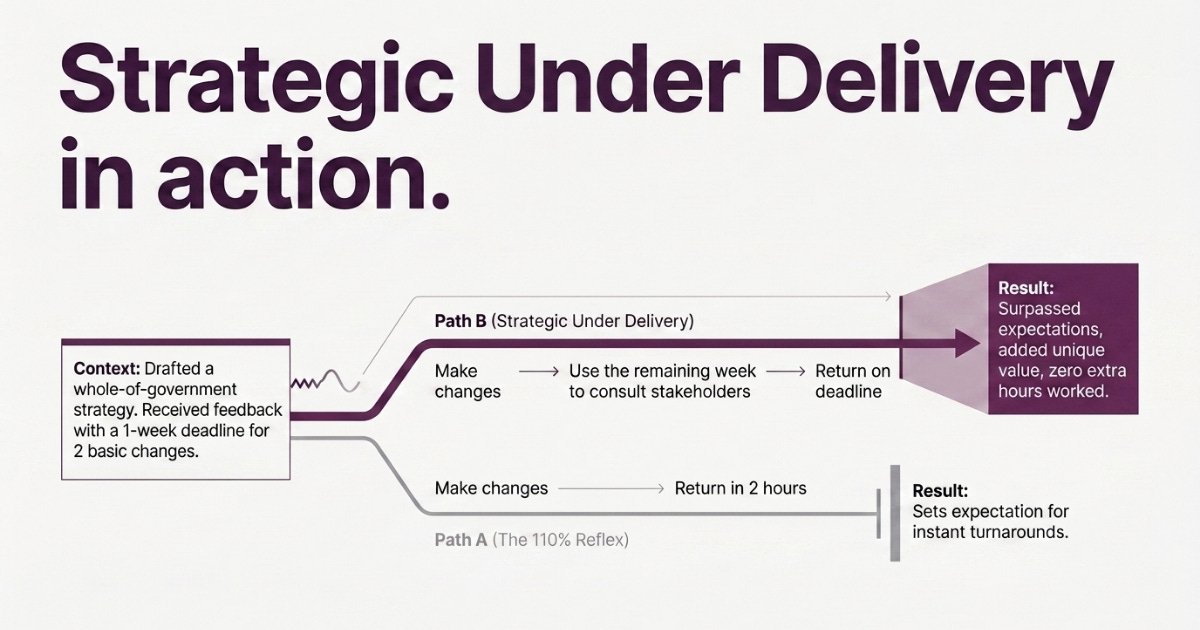
The feedback I received when the next version was reviewed was very positive, including that my delivery was a unique advantage that my peers didn’t often display. Not only had I delivered in the required timeframe, I had surpassed expectations and out shined my colleagues - and all in week two of returning to work without working any additional hours or sacrificing time away from my family. It was through this experience that I first coined the term strategic under delivery.
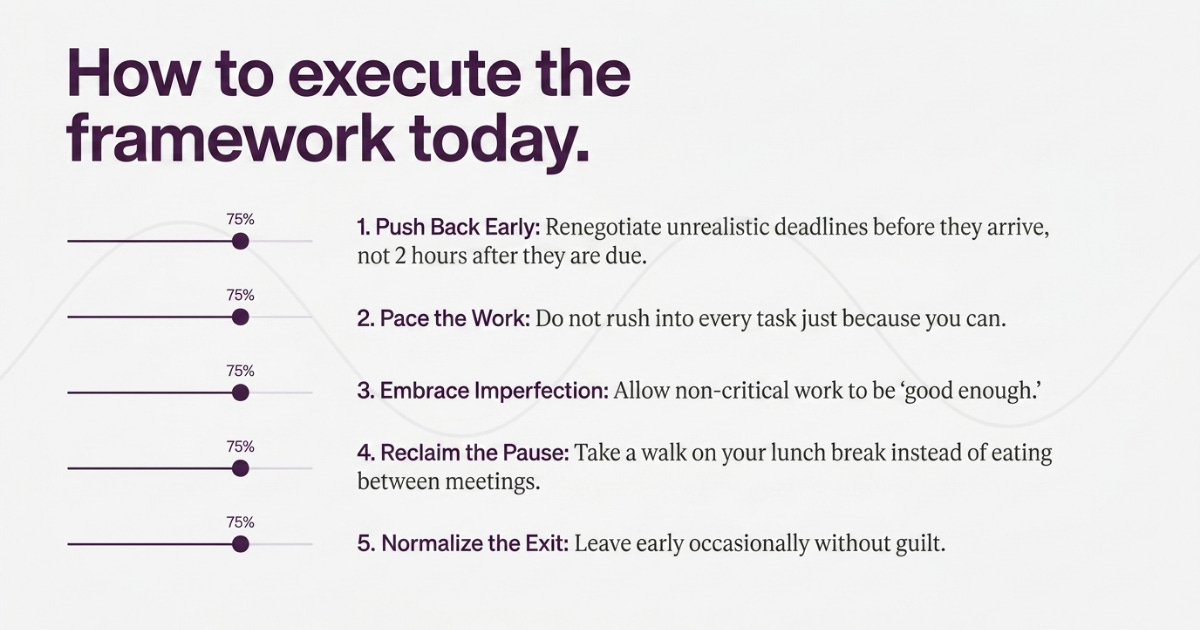
So what could this look like for you:
Pushing back on an unrealistic deadline well before it arrives.
Not rushing into every task
Allowing it to be imperfect
Going for a walk on your lunch break instead of inhaling a packet of chips in between meetings
Leaving early every now and then without the guilt
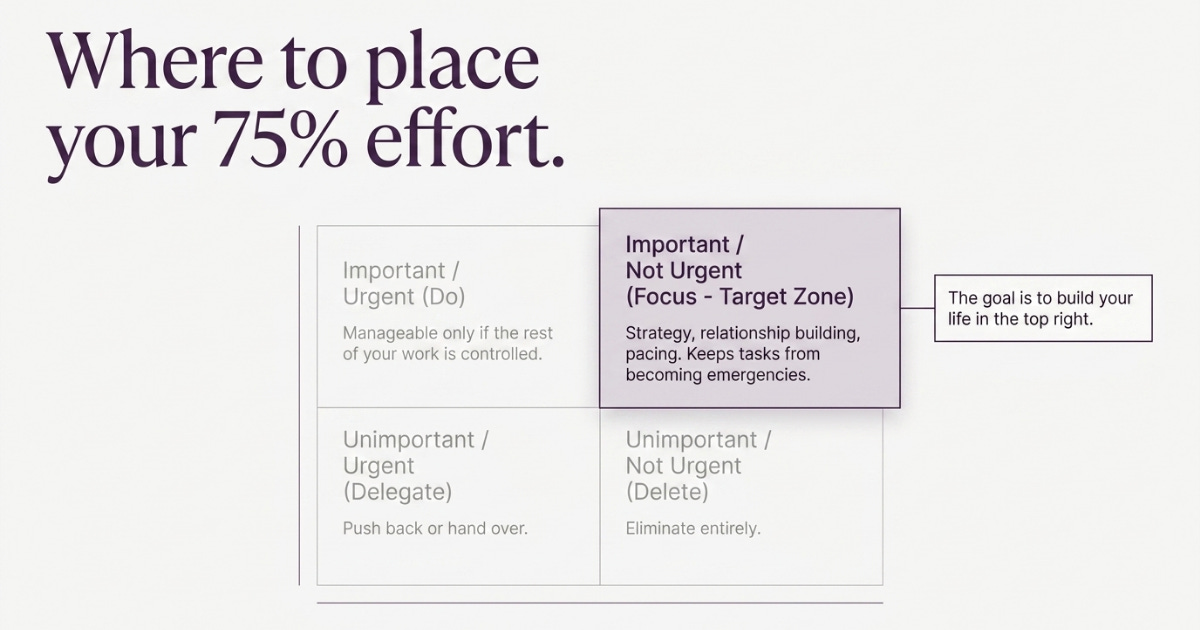
The Eisenhower Window: a tool to help identify where to place your 75% effort
A common tool for prioritising work is the Eisenhower window. Named after President Eisenhower, this tool helps you to identify where to place most of your focus. You can take this and make it more relevant to your needs or situation but the general concept is to identify the tasks that are your priorities, focus areas, need delegation or should be cancelled all together. The ideal focus area is the Important / Not Urgent category which usually stops most things from moving into the Urgent Category and overwhelming you. When the majority of your work is under control and being managed in the Important / Not Urgent category it also allows you to make room for those Urgent / Important tasks that crop up unexpectedly. The difficult part is not putting everything on your to do list into the Important / Urgent category.
Give it a go and let me know if this tool works for you.
You can’t delegate your life to someone else so stop letting work get in the way of it.
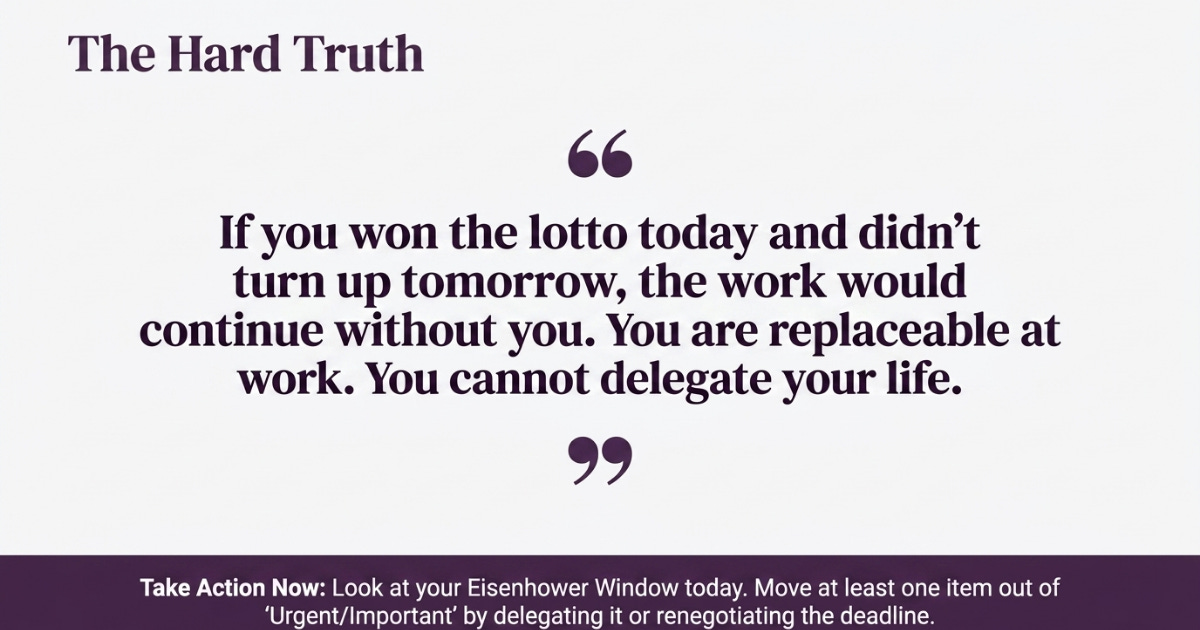
I once had a boss say to me that everyone is replaceable. If you won the lotto today and didn’t need to turn up to work tomorrow, the work would continue without you. Don’t lose yourself in unmanageable workloads or trying to prove yourself to others. Take steps today to balance your workload better, commit to working that little bit less and start focusing on you and what really matters outside of work.
Take Action: Use the Eisenhower Window today. List your current tasks, categorise them and move at least one item out of “Urgent/Important” by either delegating it or renegotiating the deadline.