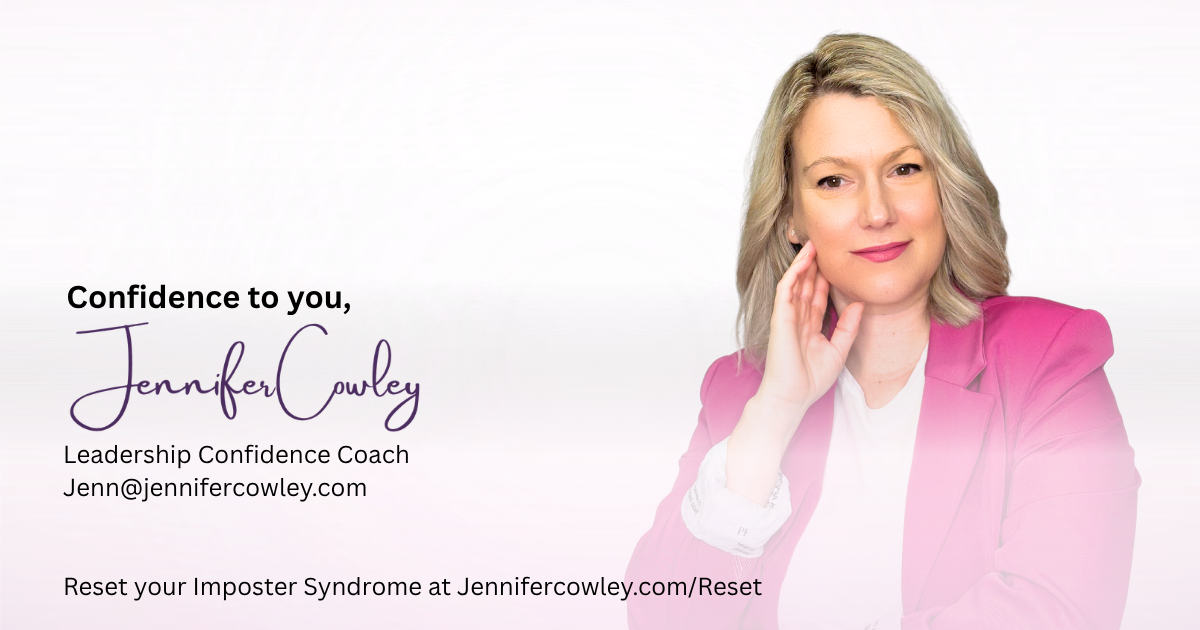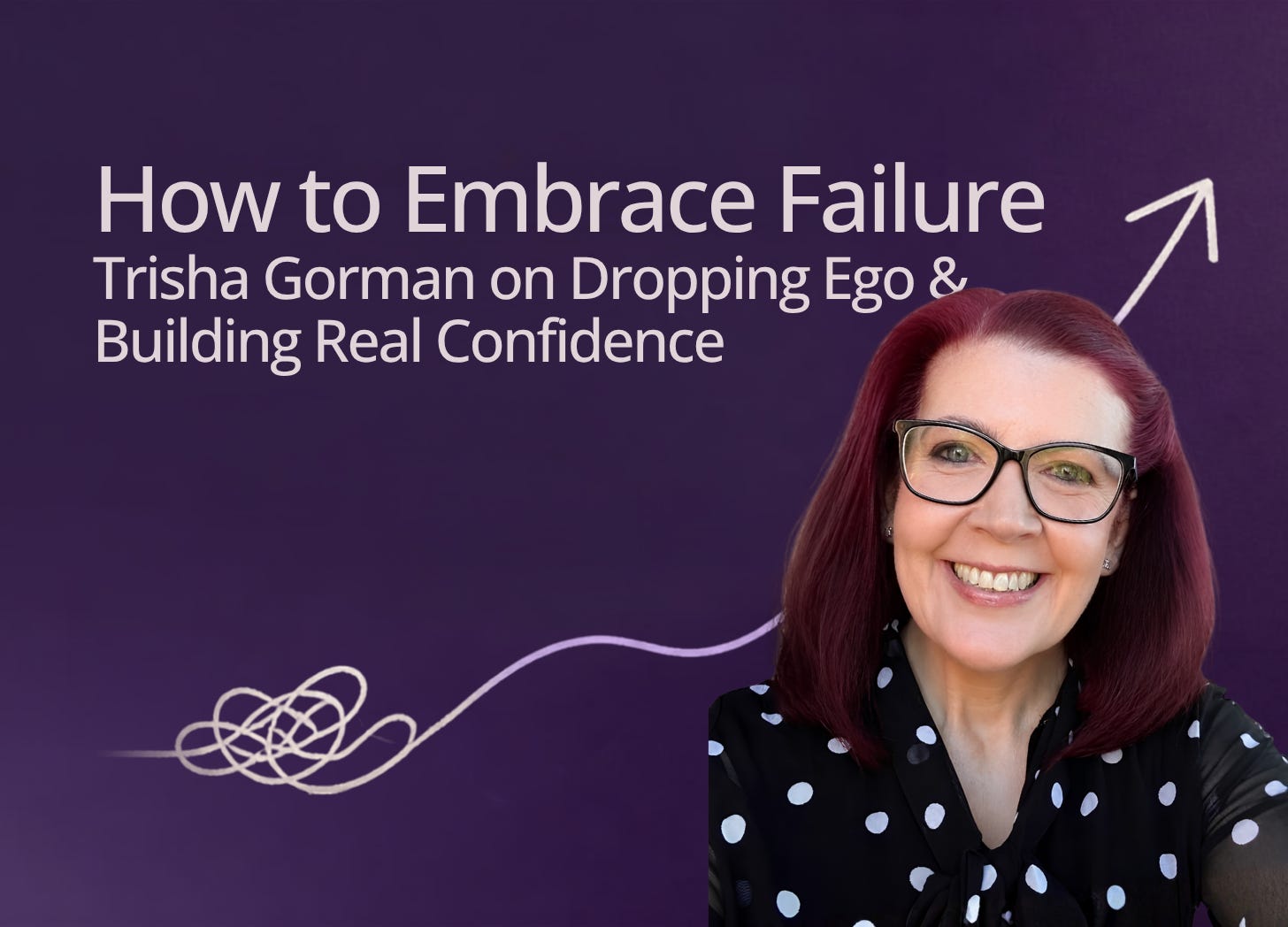
When Trisha Gorman rushed down to a local market to buy a blazer from Peak Women, my fashion label, neither of us knew it would mark the beginning of a deep professional connection. Then when we sat down to record Episode 13 of the Leadership Confidence Podcast just last week, we happened to show up wearing the exact same blazer.
Beyond our shared taste in bright blazers, our alignment runs much deeper. Trisha is a seasoned executive, a board director, a consultant of more than thirteen years, and a key force behind The Female Leader a movement dedicated to elevating women’s voices through authenticity, connection, and bold action.
Trisha holds a core belief that every professional woman needs to hear. Confidence is built, not born. It is not about having all the answers before you step up to the table. It is about trusting yourself enough to step forward, use your voice, and make decisions even when you do not feel completely ready.
In our conversation, Trisha shared her honest experience of total career failure, how she navigated boardroom intimidation, and why dropping your ego to ask for help is the ultimate catalyst for career growth.
Redefining Leadership: Why Job Titles Do Not Equal Influence
Many organisations make the mistake of conflating management with leadership. Employees often assume they cannot demonstrate leadership until they have direct reports or an executive title. Trisha challenges this assumption directly, viewing leadership as a privilege rather than an administrative status.
As Trisha explains, being viewed as a leader across your community, personal life, and professional career carries a profound sense of responsibility. You have people’s lives, futures, and perspectives in your hands, which is not a label to take lightly.
The distinction between management and true leadership is often lost in modern corporate structures. Society regularly collapses the role of manager into that of a leader, forgetting that these two disciplines require completely different skill sets. As Trisha highlighted during our interview:
“So many times society and workforces collapse manager with leader. They forget that the distinction between the disciplines is very different. You could be a leader as a junior in an organisation. On the flip side, you can be a very senior executive and have no leadership acumen at all.”
If you are waiting for a promotion or a formal title before you start leading, you are holding yourself back. You do not need direct reports to drive meaningful change, influence outcomes, or build a culture of integrity.
Trisha’s Zone of Genius
In my coaching practice, I encourage women to identify their zone of genius. This is the unique combination of strengths, perspectives, and natural talents that only you bring to the room. For Trisha, that genius lies in subtle observation and active advocacy.
Rather than focusing on what is explicitly stated, Trisha tunes into the unsaid dynamics in a room. She pays attention to environments where quiet contributors are overlooked or denied opportunities, and she deliberately uses her position to facilitate space for those individuals to join the conversation.
Recognising the unseen is a rare and essential leadership skill. True presence requires shifting your focus away from your own internal anxiety and onto how you can lift up the people around you. When you focus on creating space for others, the fear surrounding your own standing begins to evaporate.
When 100% Failure Becomes Your Best Teacher
Embracing failure is easy to talk about in theory, but deeply uncomfortable in practice. When Trisha transitioned from a permanent executive role in the Commonwealth public sector to consulting for major private banks, she experienced a severe reality check.
Having operated as a Commonwealth executive, Trisha assumed her background would automatically command respect and authority on day one in the private sector. She quickly discovered that corporate banking operated under entirely different rules. In the private sector, success hinges on your ability to build deep relationships, understand individual egos, and read varying stakeholder lenses.
Reflecting on that high-stakes transition, Trisha openly described the turning point:
“When you work in the private sector, as most people know, you need to be able to build relationships. It’s about understanding people’s perspectives, their egos, and their lenses. It became very apparent to me that the old way of being wasn’t going to work. Basically, I was 100% failing at what I was doing, and then I had to rebuild.”
Recovering from total professional failure requires an immediate shift in mindset. You must separate your personal ego from your performance and accept that perfection is an unattainable standard.
Drop Your Ego and Ask for Help
When faced with a technical gap or an unfamiliar organisational culture, many high-achieving women fall into the trap of overworking in isolation. They white-knuckle their way through the week, spending late nights trying to memorise every detail of a brief to avoid looking unprepared or incompetent. Trisha’s breakthrough came from doing the exact opposite. She discarded the pressure to maintain an expert facade and began asking direct, transparent questions.
In nearly thirty years of professional life, Trisha notes that no colleague has ever refused to assist her when she approached them with genuine curiosity. Pulling up a chair next to a subject matter expert and asking them to break down a complex concept is not a sign of weakness. It is an act of efficiency and self-assurance.
When you encounter a technical domain or system you do not fully understand, follow this three-step framework:
Acknowledge the gap without shame: Identify what you do not know without treating the knowledge gap as a reflection of your intelligence or capability.
Engage experts directly: Pull up a chair next to a technical specialist, peer, or team member who understands the detail.
Use plain, clear language: Ask them to explain the concept at a high level. Say, “I want to make sure I represent this work accurately to executive stakeholders. Can you walk me through the key mechanics so I can explain it simply?”
By asking for clarification, you bridge your knowledge gaps rapidly, remove the anxiety of pretending, and build authentic trust with your team.
Holding Your Ground in the Boardroom and Saying Yes
Five years ago, Trisha was appointed to her first major board role for an irrigation water corporation. Despite her extensive technical experience, stepping into governance brought a fresh wave of imposter syndrome.
Entering her first board meetings, Trisha initially assumed that the established directors around the table were operating on a higher level and was looking to them as leaders. Coming in with technical expertise but zero formal board experience, she initially felt intimidated. Trisha shared her reflection on overcoming that initial self-doubt:
“I went in there thinking that all of these individuals sitting around the table with me must have been intellectual giants. I was coming in with zero board acumen experience. If I was to speak to that junior board director now, I would say to myself: hold your own. The experience and lenses we bring to the table are completely different to anybody else around that table.”
Trisha applied this principle when she agreed to walk in the Revel the Runway fashion show to promote body positivity for women of all backgrounds and body types. Although stepping onto a runway felt entirely outside her comfort zone, she chose to embrace the discomfort because the broader message for other women mattered far more than her temporary unease.
Her rule of thumb for stretch opportunities reminded me of the famous advice from Richard Branson. If someone offers you an incredible opportunity, say yes first, then work out how to execute it later. As Trisha points out, if you hesitate or let fear make the decision for you, someone else will take that spot.
Guidance for Transitioning into Board Roles
For senior professional women looking to expand their leadership influence beyond their primary career, board appointments offer a powerful channel for impact. Trisha shares three practical recommendations for women exploring governance:
Connect with dedicated networks: Join organisations such as Women on Boards and complete foundational governance training through the Australian Institute of Company Directors (AICD) to master board mechanics.
Align with your core values: Do not pursue board positions purely as a retirement strategy or a vanity metric. Choose non-profits, charities, or commercial boards whose core mission aligns with your personal values and ethics.
Understand the true commitment: Board directors carry significant legal and fiduciary responsibilities as well as a significant time commitment. During business crises or structural changes, six scheduled meetings a year can quickly expand into thirty. Ensure you are prepared to carry that level of personal responsibility.
Mistakes Are Simply Stepping Stones
Career growth is rarely linear. It is a continuous process of making decisions, adapting, and learning through imperfect action. Trisha reminds us that what occurred in your 20s or 30s does not dictate what you can accomplish in your 40s and 50s. If a project or career move did not go to plan, take the nuggets of wisdom from the experience and carry them forward. Allowing past setbacks to paralyse your current choices only robs you of future opportunities.
Confidence is not an inherent trait you are born with. It is built every single time you step outside your comfort zone, ask for help without shame, and say yes to the opportunities right in front of you.
Connect with Trisha Gorman:
Website www.Thefemaleleader.com.au
LinkedIn Trish Gorman MAICD
Ready to Build Your Leadership Confidence?
If you are ready to overcome internal confidence blocks, articulate your unique value, and expand your executive influence, let us work together.
Connect with Jennifer Cowley: Visit jennifercowley.com to explore coaching programmes and executive workshop packages.
Share this article: Send this piece to a colleague who needs a reminder that failure is simply a stepping stone to their next level of leadership.