Many professional women begin their leadership journeys with a rigid framework of right and wrong. We believe that if we have the correct data, the most logical argument, and the clearest vision, our teams will naturally fall into line. We operate under the assumption that being right is the exact same thing as being a leader. This is a fundamental misunderstanding of how professional influence actually works.
When you rely solely on your own intellect to drive a team forward, you will inevitably hit a wall. You become frustrated when others do not grasp the overarching vision as quickly as you do. You start to view disagreement as a lack of capability rather than a difference in perspective. This rigid mindset limits your authority and isolates you from the very people you are supposed to guide. True leadership does not live in black and white certainties. It lives in the grey areas.
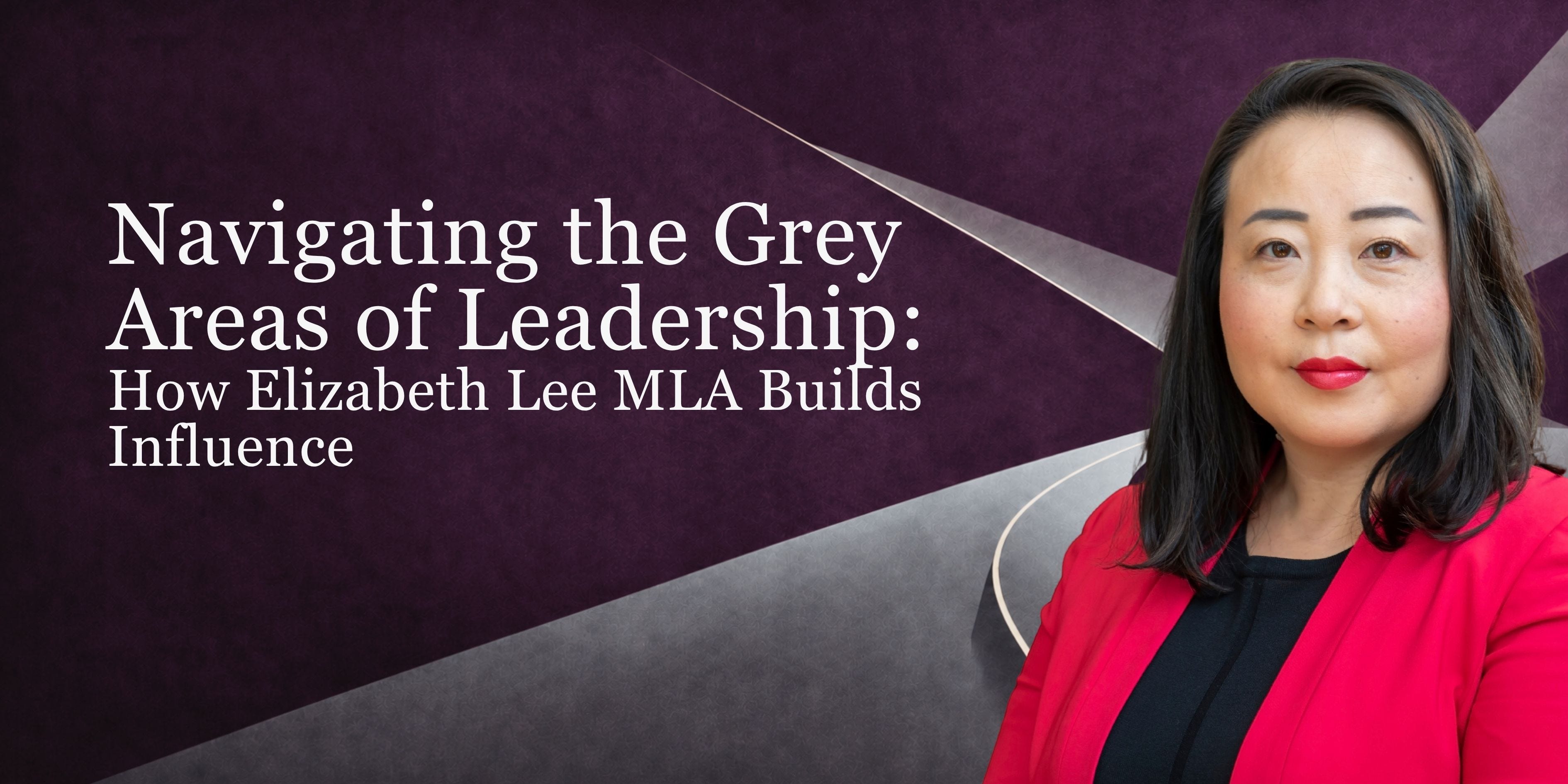
In Episode 18 of the Leadership Confidence Podcast, I sat down with Elizabeth Lee MLA. Elizabeth is a Member of the Legislative Assembly in the Australian Capital Territory and the former leader of the Canberra Liberals. She brings a wealth of experience from her time as a lawyer, an academic, and a political leader. During our conversation, Elizabeth shared a profound reflection on how her leadership style has evolved over a decade in the public eye. She realised that having the right answer can be meaningless if you cannot bring people on the journey with you.
The Trap of Right and Wrong
In the early stages of our careers, we are rewarded heavily for our technical expertise. We are promoted because we know the answers and can execute tasks flawlessly. As you transition into senior leadership, the rules of the game change completely. Your primary job is no longer to be the smartest person in the room. Your job is to align diverse groups of people toward a shared, strategic outcome.
Elizabeth reflected openly on this shift during our interview. She admitted that early in her leadership, she was deeply earnest about her convictions. She knew what she believed was right for her party, her constituents, and her city. However, she learned a hard lesson about the limitations of simply being correct.
“I think in the beginning I was very earnest about what was right and what was wrong and I had very clear views about that,” Elizabeth explained. “I think that what I’m learning about leadership now is that there are grey patches and grey areas and that as much as you absolutely believe that this is the right path, if you haven’t done the work to get people to invest in it and be accountable for it, it’s very difficult to take people on the journey with you.”
This is a critical insight for any leader looking to expand her influence. When you push for a specific decision, no matter how much you believe it is objectively the right one, you might win the immediate debate, but it can weaken the long-term commitment of your team. Everyone needs to feel heard and valued, no matter what their views. If you ignore the grey areas where compromise and conversation happen, you are managing by force. You are not leading by influence.
When Your Superpower Becomes a Blind Spot
To navigate these grey areas effectively, you must clearly understand the unique value you bring to the table. Every leader has a specific genius. For some, it is strategic foresight. For others, it is high emotional intelligence or the ability to network and connect disparate groups of people.
Elizabeth identified her unique strengths early on, thanks to an observation from her father. She possesses an incredibly sharp memory and the ability to read and process information at a rapid pace. In the high-pressure environment of politics and law, this is a distinct advantage. Being able to digest briefs quickly and recall facts accurately during debates gave Elizabeth a competitive edge. However, an unexamined strength can quickly become a leadership liability. When you excel in a specific area, you naturally assume others can operate at the exact same level. If you process information instantly, you become impatient with colleagues who need time to reflect. If you are a visionary thinker, you become frustrated with team members who get bogged down in operational details.
This is where many capable women stumble. We expect our teams to mirror our own working styles and output speeds. When they do not, we label them as difficult or incompetent. True leadership requires you to recognise your unique value while simultaneously respecting the diverse strengths of those around you. You must learn to temper your expectations and create psychological safety for people who move through the professional world differently than you do.
“I had always prided myself on being able to identify the strengths of everyone. That is what makes a strong team, because you bring all of that together as a person who connects people. But reflecting on my experiences over the last couple of years, I realise I could have done that better. I could have taken a bit more time to identify people’s strengths and been more open about sharing the wins.”
Acknowledging this gap is not a failure. It is the hallmark of a self-aware leader. When you stop treating team development as a corporate tick-box exercise, you stop projecting your own working style onto others. Genuinely validating the diverse strengths around you builds deep trust. It proves to your team that you see them for who they are,rather than judging them for how closely they mirror your own pace. This level of authentic curiosity is the bridge between managing a group of people and actually leading them.
Lean into Persuasive Listening
To build this kind of inclusive, influential leadership, you need a practical mechanism. You cannot simply tell yourself to be more patient. You must change how you physically and mentally interact with your team during moments of friction.
This brings us to the concept of the balcony and the dance floor. The dance floor is the daily grind. It is the flooded inbox, the urgent meetings, and the tactical execution of daily tasks. When you are on the dance floor, your vision is limited to the people immediately bumping into you. It is loud, chaotic, and highly reactive.
The balcony represents strategic oversight. When you step onto the balcony, you elevate yourself above the noise. You can observe the patterns of behaviour within your team. You can see who is struggling, who is disconnected, and where the interpersonal roadblocks lie.
When you face resistance from a team member, your immediate instinct will be to stay on the dance floor and argue your point. You will want to rely on your unique superpowers to prove that you are right and they are wrong. You must resist this urge. Instead, pause the debate and shift your goal entirely. Stop trying to win the argument. Start trying to understand their perspective.
Ask an open question about their concerns and then remain completely silent. This is persuasive listening. You are not listening to formulate your rebuttal. You are listening to uncover the hidden motivations driving their pushback. Do they feel overworked. Are they lacking the technical skills to execute the plan. Do they have a valid piece of historical context that you completely missed because you were moving too fast.
By taking the time to understand their perspective, you validate their experience. You move the conversation out of the rigid black and white and into the grey area where real collaboration happens. You influence them not by dominating the conversation, but by demonstrating that their input matters to the final outcome.
Enjoying the Dance Floor
While the balcony is essential for strategic thinking and persuasive listening, you cannot live there permanently. A leader who refuses to step onto the dance floor becomes disconnected, aloof, and out of touch with the reality of the work.
You will inevitably get dragged back down into the tactical chaos of your organisation. When this happens, do not view it as a failure of your leadership or a breakdown of your boundaries. Accept it as a necessary part of the role.
As Elizabeth brilliantly advised during our chat, you need to maintain a sense of perspective and joy in your work.
“As much as people do encourage you to get on the balcony, if you do find yourself on the dance floor, make sure that you have a great time.”
Do not let the pursuit of perfect leadership strip the enjoyment from your career. Connect with your team. Get involved in the intricate details when a crisis demands it. Have a boogie on the dance floor before stepping back up to the balcony to guide the next phase of your strategic vision.
Confidence and good leadership come from within. They are forged by learning from your mistakes, adapting your communication style, and accepting that perfection is an impossible standard. When you stop demanding that everyone operate exactly as you do, you open the door to genuine influence. You become a leader who does not just demand compliance, but actively inspires commitment.
To hear the full conversation with Elizabeth Lee MLA, listen to Episode 18 of the Leadership Confidence Podcast.
Connect with Elizabeth Lee MLA
Connect with Elizabeth: LinkedIn, Facebook, Instagram
Parliamentary Email: lee@parliament.act.gov.au
Are you ready to understand your unique leadership qualities and achieve your career goals. Head over to jennifercowley.com to explore coaching programmes designed to help you break barriers, bring your unique value to the table, and finally be seen as the leader you are.