



Key Takeaway: You will never get it perfect. It is more important to learn from every attempt.
One of the most common blocks I see in high-level leadership is perfectionism. We often wear our perfectionism as a badge of honour, believing it is the reason for our success. In truth, perfectionism is a shield. It is a way to protect ourselves from the pain of judgment or the shame of being “wrong.”
In a leadership context, perfectionism is a liability. It leads to micromanagement, delayed decision-making, and sometimes even burnout. If you are waiting for a project or report to be 100% perfect before you sign off, you are actually hindering progress and operating from a place of fear, not excellence.

Done is Better than Perfect
I am going to share with you one of the best pieces of advice I ever received as a mid-level employee. I had moved away from operations and was working in enterprise strategy at the time. The team alongside me had been tasked to draft the new ‘blueprint’ for the organisation which seemed like a mammoth task to someone who had just moved into the world of corporate strategy. I wanted to learn from those of my peers that were pulling it together so I asked how you even start going about such a task. What Toby said to me I have never forgotten and I have passed it on to many people who were struggling with perfectionism. I also tell my team this all the time when they are drafting or designing things for me.
“Give them the turd, because they will polish it anyway.” Toby.
It seems controversial and yes it is a little crass but stick with me. He explained that anything we write at our level on a document as important as the corporate strategy was going to cross so many desks on its way to the top boss for consideration. Every single person who read the document was going to add their spin, their expertise, their style. There was no way we could predict what all of those changes would be so there was no point trying to second guess ourselves.
I saw this in action as a newly promoted public servant working in the team. I drafted my first set of Talking Points for the head of the organisation. I sent it to my supervisor for review and sending up the chain. I was nervous to get feedback on the work that I had done. My supervisor made sure she took the time to talk me through the changes she had made so that I could understand them and improve for next time. Then it happened. She sent her version to her boss, who then changed it again. What she changed it to seemed to be quite similar to my original version, we had used some of the same words and phrases. When I read it I saw the truth. No one gets it 100% perfect. No doubt it was changed several more times on its way to the top office. I learnt a valuable lesson in the imperfect.
The Imperfect Leader
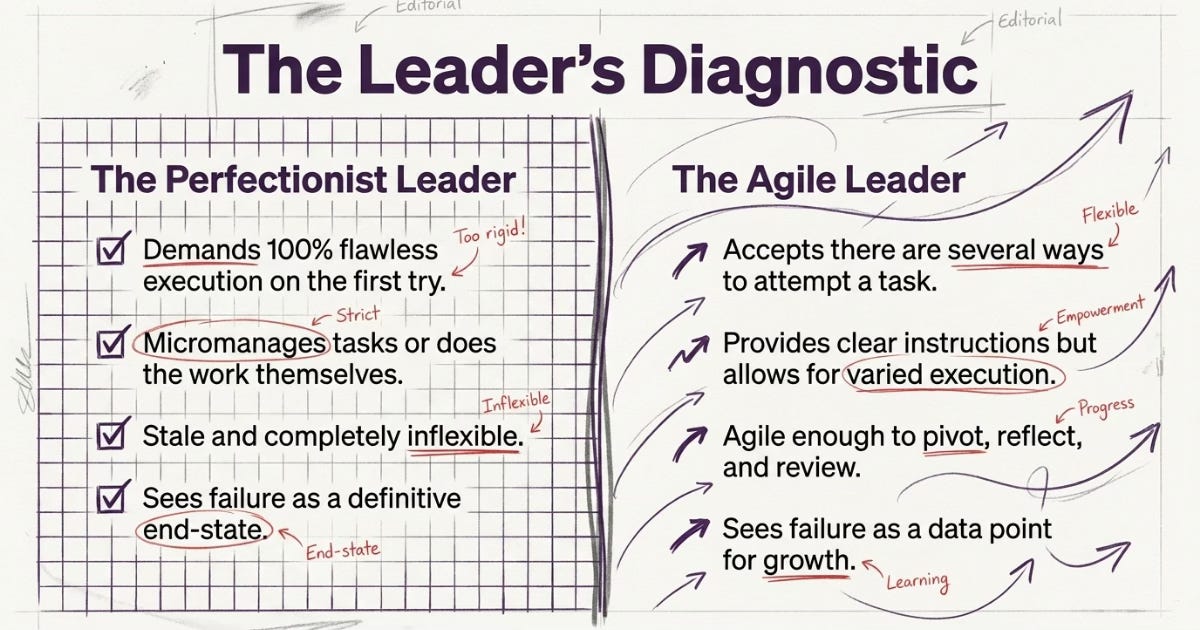
As leaders we need to flip the narrative on perfectionism as well. When we demand teams to get things perfect every time, we are setting them up to fail every time. This expectation of perfection builds stress, anxiety and encourages extreme work hours as they try and read what is in our minds. While we can be clear in our instructions to get jobs done, no one else will complete the task in the same way you would. Leaders then step into one of two modes to manage this, micromangement or doing it themselves. Neither is productive or effective.
Perfectionism doesn’t just apply to management of tasks. A lot of leaders struggle struggle to communicate with their teams, have difficult conversations and provide helpful feedback because they fear getting it wrong.
Just yesterday I had a call where a mid-level manager explained all the things she had done to try and manage a conflict between team members and asked me, “What did I do right and what did I do wrong?” But there is no ‘perfect’ way to have these conversations in any scenario. Each person will respond differently to conversations, so even if you managed to do an excellent job managing the last conflict, it will be unlikely that you will be able to achieve the same result with the exact same approach. The important thing about engaging with staff, colleagues and others in the workplace is keeping a growth mindset. Being open to others ideas, opinions and expertise while learning from each interaction. Every experience you have will help shape and guide you in the next conversation.
No leader is Perfect
If you think of the best leader you have ever worked with, they would still not have gotten everything right. It may be helpful for you to do some reflection or ask someone else who worked with them about their leadership. Did others experience the same way you did? What were they not good at? What was it about their leadership that resonated with you, and how you could try and incorporate it into your own style?
Failure is uncomfortable - but necessary.
As women we have the tendency to be people pleasers and perfectionists. This leads us to never want to start something or move on to something new without feeling like we will be good at it. Failure was not welcomed or encouraged when we were young. Exploring, getting dirty, taking risks were not encouraged. So instead we learnt to be careful, to be precise, to be perfect. But growth does not come from perfect. Trying to be perfect does not allow us the space to fail. Does not give us the room to grow. Failing is part of the journey.
We must move from “Perfectionism” and instead focus on “Constant Improvement.” This means accepting that you won’t always get it right and that there are several other ways of attempting the same thing. Often there is no right way, just the best way you could have done it at the time. Modern leadership requires the agility to pivot, reflect and review to stop us from becoming stale micromanagers that are completely inflexible.
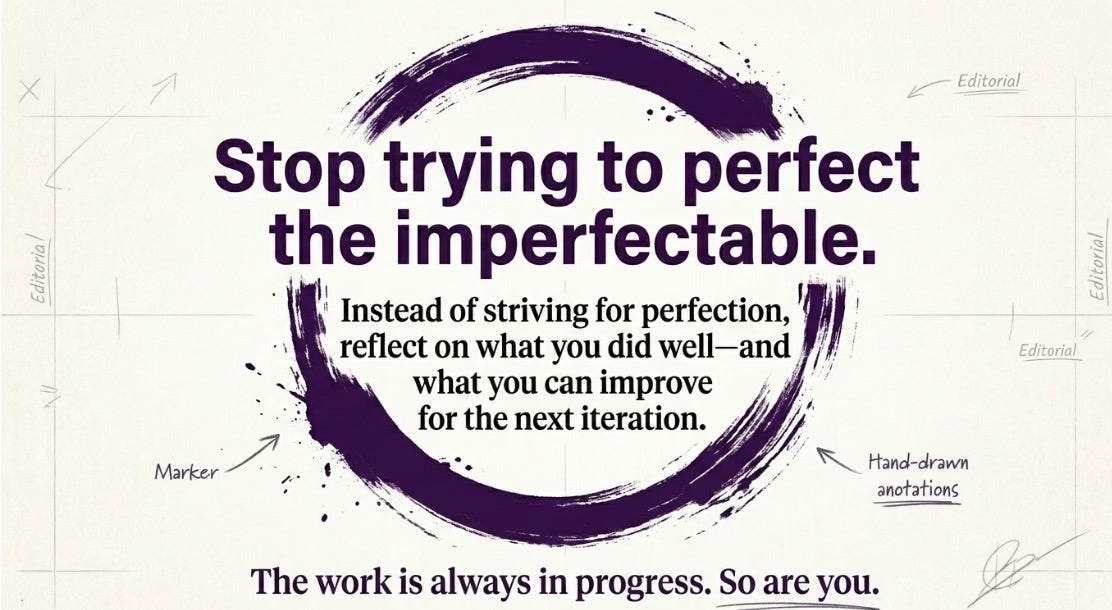
Take Action: Instead of striving for perfection, reflect on what you did well and what you can improve on for next time.