You have taken the promotion, you have a team you are now responsible for and the stakes are higher than ever. So what now…? You work endlessly, trying to impress your boss, trying to prove you deserved the promotion, and keep that inner voice in your head that’s telling you that you’re not good enough.
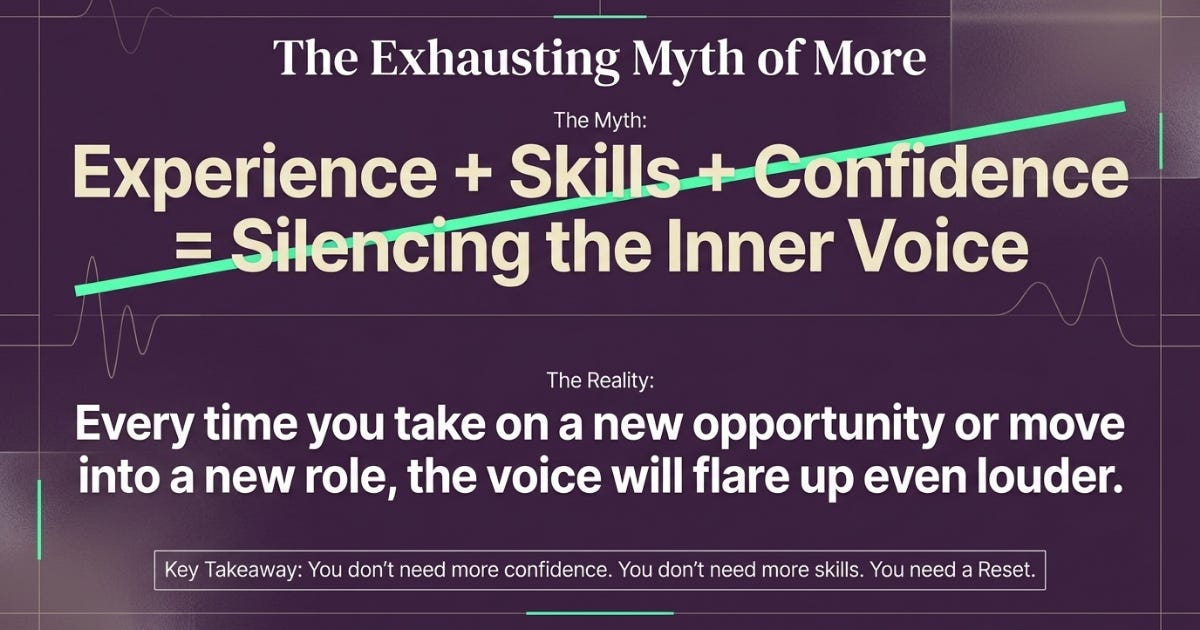
That is a sure fire path to burnout and anxiety. You don’t need more experience, you don’t need more kills or more tools, and you definitely don’t need more confidence. What you need is a reset.
An Imposter Syndrome Reset to break that spiral of self doubt.
What is Imposter Syndrome?
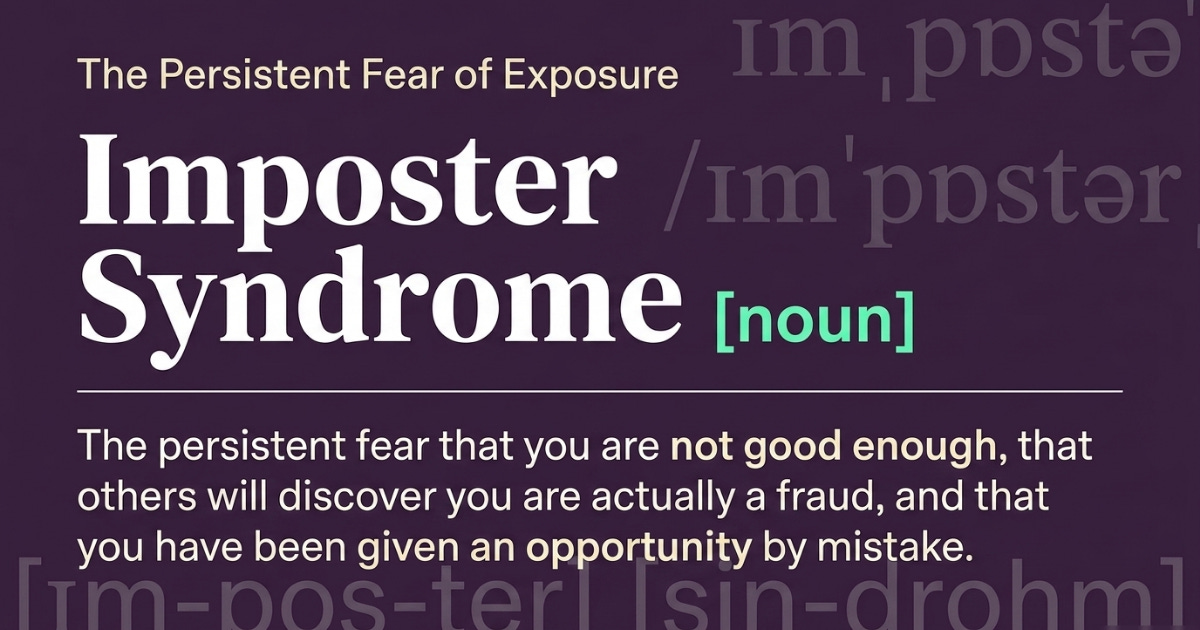
Imposter Syndrome is the fear that you are not good enough and that others will discover that you are actually a fraud. That you have been given this opportunity by mistake and that they were incorrect when they thought you were able to do the job.
If this is feeling a little too close to home, you are not alone.
Many famously, successful women (and men) have admitted they have experienced Imposter Syndrome.
“You think, Why would anyone want to see me again in a movie? And I don’t know how to act anyway, so why am doing this?’ “
MERYL STREEP“I have written 11 books, but each time I think, ‘uh oh, they’re going to find out now. I’ve run a game on everybody, and they’re going to find me out.”
MAYA ANGELOU“I still have a little impostor syndrome... It doesn’t go away, that feeling that you shouldn’t take me that seriously. What do I know? | share that with you because we all have doubts in our abilities, about our power and what that power is.”
MICHELLE OBAMA

The Imposter Syndrome’s voice in your head is the brains way of telling you that you are scared. That something could happen that you may not be prepared to deal with or that there is a risk that the outcome may not be a positive one.
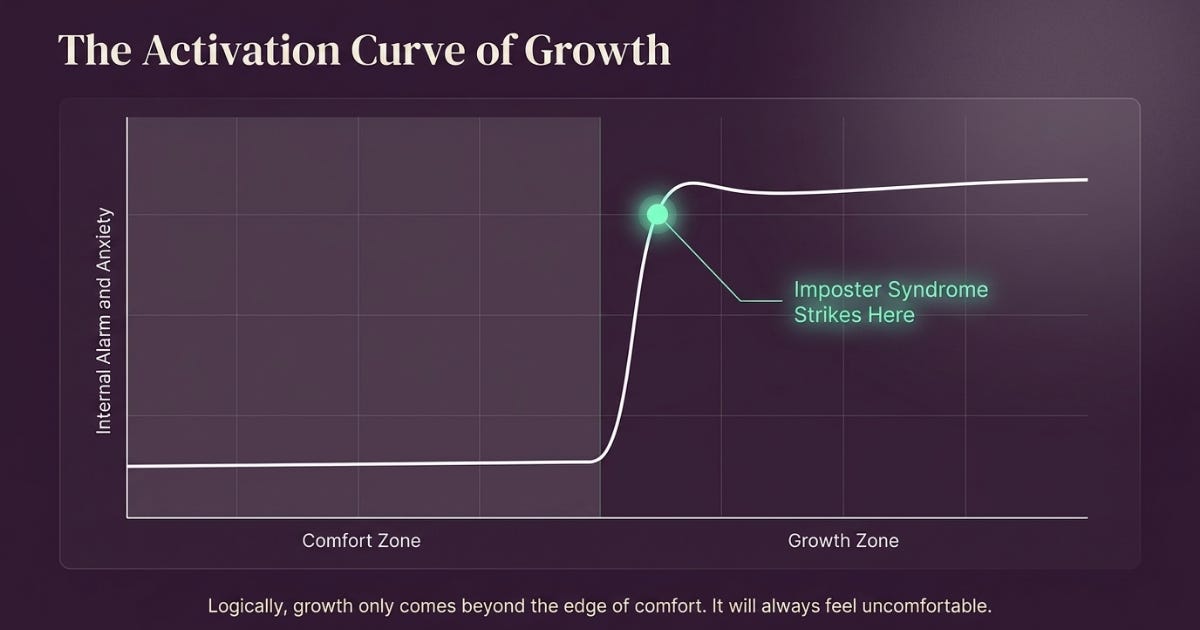
Imposter Syndrome is the best way to describe the uncomfortable feeling we get when we are pushing outside of our comfort zone. Growth only comes beyond this point and therefore is logically always going to be uncomfortable. This does not mean that we shouldn’t try, do and try again.
This fear represents a time when our safety was threatened by different risks. Risks that could involve wild animals or extreme weather. In order to survive we needed our community, our tribe to accept us. To be expelled by the tribe, was certain death from these threats as humans were stronger together, therefore your brain is biologically wired to encourage you to fit in with the tribe and not push any boundaries. This now looks like constant worrying about what others think. However in the 21st century, there are so many positive reasons to act regardless of what others think of you. There are no hungry tigers outside the office doors waiting for you to step out of the comfort of the tribe.
The reality of Imposter Syndrome
Imposter Syndrome is a negative thought pattern or anxiety that tells you you are not good enough and that others will discover you are a fraud. This can manifest in procrastination, withdrawal, perfectionism, people pleasing, anxiety or even panic attacks in extreme cases.
It can stop you from volunteering for the next big opportunity, turning down promotions, keeping your ideas and opinions to yourself in meetings. You may even accept unprofessional behaviour such as bullying and undermining to occur because you are unable to stand up for yourself or others around you.
For some the voice is a constant companion that narrates their day, always on and relentless in the unconstructive criticism. For others it can be sporadic sometimes striking at very unhelpful times. For me it is a regular cycle of self-doubt experienced on different days depending on how tired, busy or stressed I am.
The reality of Imposter Syndrome and negative thought patterns is that they aren’t reality. Just because you thought it, doesn’t make it true. If you think, “I am not good enough,” this isn’t based on fact. It’s just an opinion and if you’re the only person thinking it, it is not a universal truth. The important thing to remember is that you are not unique in having Imposter Syndrome, it’s how you manage it that matters.
The Reset
Whatever your Imposter Syndrome looks like, no amount of ‘confidence’, skills or experience is going to silence it completely. The likelihood is that every time you take on a new opportunity or move into a new role it will flare up even louder than before.
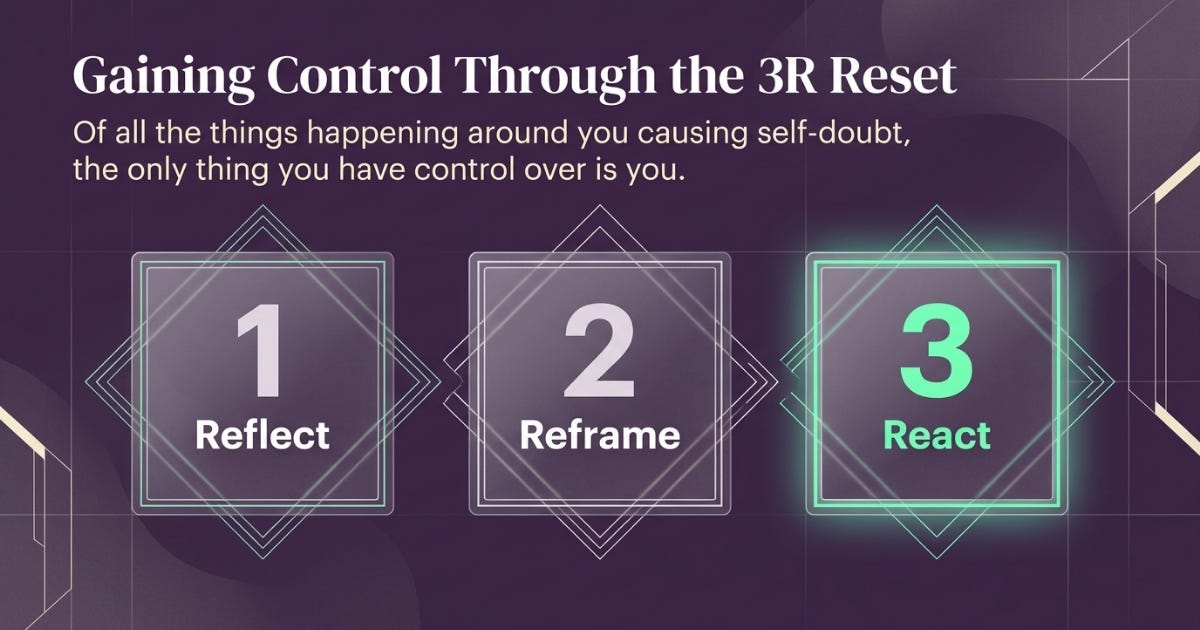
So instead of hiding under your bedcovers and never leaving your house again, you need to understand the fundamental steps to quieten the noise. Remember, of all the things happening around you that is causing your Imposter Syndrome, the one thing you have control over is you.
Save the 3Rs for the next time your Imposter Syndrome gets loud.
Reflect
A lot of the time what happens when these thoughts pop into our head is you get very uncomfortable and just want them to go away. You don’t have time or the energy to deal with a barrage of self-doubt so you try and push it to the back of your mind so you can just get through the uncomfortableness as quickly as possible. It isn’t going away though.
Acknowledge the thought. Recognise that it is telling you you are doing something scary and that this is your brains way of trying to protect you.
Reframe
Instead of pushing these thoughts away, instead reframe them into an objective view point. Say to yourself: ‘I realise that I am uncomfortable because I haven’t done this before, or I am worried about saying the wrong thing. This is a natural reaction in this situation but it is a sign I am stepping out of my comfort zone and stepping into growth. Thank you for reminding me why this is important to me.’
Make your reframe personal to your situation. Uncomfortable is not bad, it is a sign of growth.
React
You don’t need a grand gesture. This is not about showing up or proving anything to those around you. It’s about taking a small step for yourself.
If you spend all of your time over-editing to perfect the tiniest detail, instead create a strict 2-draft rule before you send your briefing up the chain.
If you have trouble contributing in meetings, try the “First 10 Minutes” rule where you must ask a clarifying question or acknowledge another persons point early in the meeting to break through that anxiety of trying to con tribute something meaningful.
If you are trying to impress your supervisor, instead write down a self-reflection of your progress and identify one area for improvement.
Repeat
By taking this small step, you are well on your way to more confidence and less imposter syndrome. It won’t ever be comeplety quiet while you continue to grow. The more you practice the easier it will be to more past your imposter syndrome whenever it raises its ugly head.
Next Steps
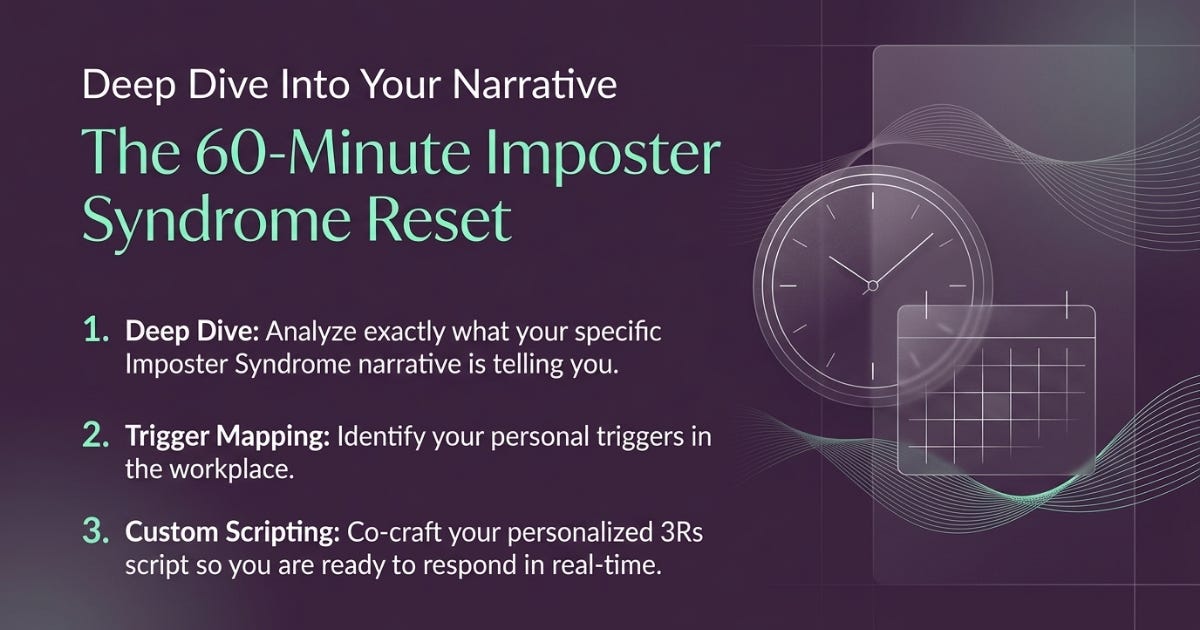
If you are ready to break through your Imposter Syndrome, but are not sure where to start, book in your Imposter Syndrome Reset. In this 60 minute session we will deep dive exactly what your Imposter Syndrome is telling you, identify your triggers and co-craft your 3Rs script so that you are ready to stop shrinking and start growing. Book your Imposter Syndrome Reset at the link below.